

5th June, 2026
Review by: Chris Spencer, Addiction Specialist
AI, Dopamine and the New Psychology of Dependency
- Outpatient Addiction Treatment Centre
Can Technology Become Emotionally Compulsive?
From my observation and personal experience, it is not only AI itself that can become compulsive, but the constant stimulation, instant response, emotional engagement, and dopamine reinforcement that technology now provides.
As somebody who has worked within addiction and behavioural health for many years, I have become increasingly aware that the issue may not simply be technology itself, but the way human beings emotionally interact with it.
I was recently sitting in a restaurant when I noticed a family of four seated at the next table. The children were both engrossed in their iPhones, while the parents were also absorbed in browsing their own phones. What struck me was not the technology itself, but the silence between them. Four people physically together, yet psychologically elsewhere.
I found it surprisingly disturbing.
If the current trend surrounding social media and constant digital stimulation continues, and I believe it will, we may need to start asking deeper questions about attention, connection, emotional dependency, and the long-term effects this level of stimulation may be having on the human mind.

Social media already provides instant stimulation, instant distraction, and instant validation. AI, however, may take this one step further because the interaction becomes even more immediate, personalised, responsive, and emotionally engaging.
That changes the psychological relationship completely.
Dopamine, Stimulation and Instant Reward
Many forms of compulsive behaviour are driven by anticipation, stimulation, and reward. Whether it is gambling, social media, pornography, gaming, alcohol, cocaine, or compulsive phone use, the brain begins responding to repeated dopamine reinforcement and emotional escape.
AI may now be entering that same psychological territory.
Unlike traditional social media, AI responds directly to the individual. It communicates instantly, adapts to conversations, remembers context, offers reassurance, answers questions, and can even simulate emotional understanding.
For some people, particularly those experiencing loneliness, anxiety, stress, isolation, or emotional discomfort, that interaction may become increasingly attractive.
That does not mean AI itself is dangerous. But it does raise important questions about human vulnerability, emotional dependency, and how technology may affect behaviour over time.
The Numbers Are Already Rising
Current statistics show that AI usage is increasing at an extraordinary pace.
Some recent reports suggest:
Some recent reports suggest:
Over 35% of people now use AI tools daily
Hundreds of millions of people worldwide interact with AI every day
Nearly one-third of UK citizens have already used AI for emotional support, companionship, or personal interaction
Many users are now turning to AI for relationship advice, stress management, emotional reassurance, and mental health conversations
Research is also beginning to explore whether heavy AI usage may increase emotional dependence, loneliness, or psychological attachment in vulnerable individuals.
FROM COMPULSIVE USE TO CONSCIOUS RECOVERY
Speak with us. All conversations are confidential, with no obligation.
A Different Kind of Relationship With Technology
What makes AI different from previous forms of technology may be the emotional relationship people begin developing with it.
Part of what makes this so appealing is that very often we are not face to face with the person we are communicating with. In normal human interaction there can be uncertainty, misunderstanding, embarrassment, emotional tension, or the fear of saying the wrong thing. Many people spend time after sending a text message worrying about how it was interpreted or whether they made a mistake.
AI changes that dynamic completely.
The interaction is immediate, responsive, and psychologically comfortable. There is no awkward silence, no visible rejection, no fear of judgement, and no emotional unpredictability in the same way human relationships often contain. For some people, that can become extremely attractive.
Unlike scrolling passively through social media, AI interacts directly with the individual. It responds instantly, remains constantly available, adapts to conversations, remembers context, and can create the feeling of being understood without conflict or criticism.
That changes the psychological relationship completely.
For some people, particularly those already struggling with loneliness, anxiety, addiction, stress, emotional isolation, or low self-esteem, that experience may become psychologically powerful,this does not necessarily mean AI itself is dangerous, the deeper concern may be what this reveals about human vulnerability.
Human beings naturally move toward things that reduce discomfort and increase emotional relief. Throughout history people have sought escape, reassurance, stimulation, distraction, validation, comfort, and relief from emotional pain. Technology may now be providing these experiences with greater speed, intensity, and accessibility than ever before.
The question may no longer simply be whether technology is addictive.
The deeper question may be why human beings are becoming increasingly vulnerable to anything that offers instant stimulation, emotional comfort, reassurance, distraction, or escape from uncomfortable emotional states, that may be where the real psychological conversation begins.
If you or somebody close to you is struggling with compulsive behaviours, emotional isolation, alcohol dependency, or unhealthy coping patterns, Phoenix Programmes offers confidential support focused on understanding the deeper psychological drivers behind addiction and behaviour.
If you think that you or someone you love might have a problem with drug or alcohol addiction, compulsive behaviour or emotional disorders, reach out and speak to our specialist addiction rehab treatment team on our confidential helpline +34 691 881 422. Immediate admission available.
Popular Blogs
-
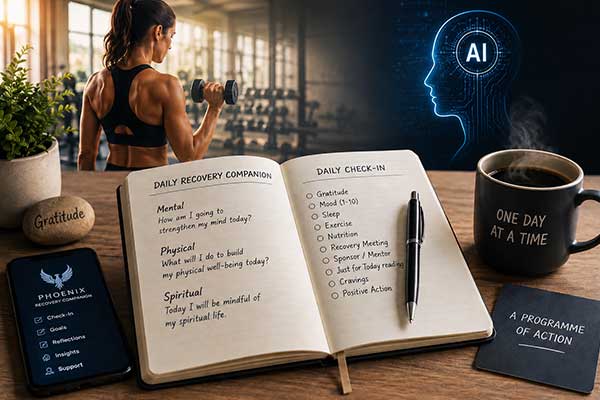
Daily AI Companion for Recovery: Accountability That Works
Explore how artificial intelligence can support addiction recovery through daily accountability, habit tracking, and personalised check-ins. Rather than predicting relapse, AI may help reinforce the actions that keep people sober.
-

Gambling Addiction in Marbella: When It Stops Being a Game
Gambling can start as harmless entertainment, but over time it can shift into something harder to control. This article explores when gambling becomes a problem and how structured support can help create lasting change.